
Last Updated: October 23, 2026
Quick Summary
Durable concrete stamps are professional-grade tools cast from heavy-duty polyurethane that maintain detail through hundreds of uses, enabling contractors to deliver high-end decorative finishes repeatedly without constant tool replacement. Premium stamps flex slightly for cleaner release and preserve crisp lines over repeated pours, making them essential for contractors doing more than 5 stamped concrete projects annually.
- The global stamped-concrete market reached USD 13.33 billion in 2024 and is projected to reach USD 22.71 billion by 2033 at 6.1% CAGR.
- Heavy-duty polyurethane stamps last 500+ applications while budget plastic stamps fail after 30-50 uses.
- A $69 stone stamp kit breaks even after just two projects, making purchase financially mandatory for contractors doing 5+ projects yearly.
- Stamps must be cleaned immediately after use, stored flat in dry locations away from heat, and inspected before every pour to maintain quality.
- Something Better Corporation has trained 5,376 contractors and artisans since 1998 through hands-on classes and video training included with kit purchases.
Table of Contents
- What Makes Durable Concrete Stamps Essential for Contractors
- Concrete Stamp Patterns and Their Applications
- Stone Stamps for High-End Projects
- Wood Texture Stamps for Realistic Detail
- Texture Rollers: Covering Large Areas Efficiently
- Custom Concrete Stamps for Branded Projects
- Concrete Stamp Maintenance and Care
- Durability Comparison: Materials and Performance
- Total Cost of Ownership: Rental vs. Purchase
- Contractor Training and Support
- Frequently Asked Questions
What Makes Durable Concrete Stamps Essential for Contractors
Contractors face a persistent challenge: delivering high-end decorative concrete finishes without breaking the budget or sacrificing durability. The global stamped-concrete market was valued at USD 13.33 billion in 2024 and is projected to reach USD 22.71 billion by 2033, at a 6.1% CAGR, according to Custom Market Insights market-size data. This growth reflects rising demand for durable concrete stamps that withstand repeated jobsite use while producing authentic, realistic textures. At Something Better Corporation, we've helped over 5,376 contractors and artisans master decorative concrete techniques using professional-grade tools cast from real stone and wood. The right durable concrete stamps aren't just about creating beautiful surfaces, they're about building a profitable, repeatable business model.
Most contractors underestimate tool durability. Premium durable concrete stamps maintain detail through hundreds of uses, so a contractor stamping 50 projects a year invests once instead of spending thousands on replacements.
Concrete Stamp Patterns and Their Applications
The decorative concrete market offers a broad range of patterns.
Stone patterns dominate high-end residential work: ashlar, slate, and flagstone command premium pricing on luxury patios, pool decks, and water features. Wood patterns appeal to homeowners wanting timber aesthetics without maintenance. Brick suits commercial applications and accent borders, while specialty patterns like coral stone and custom logos add personality to branded projects.
The pattern you choose affects both tool selection and project profitability. A single contractor rarely masters every pattern, specialization drives efficiency. We recommend starting with 2-3 core patterns and expanding as demand grows.
Stone Stamps for High-End Projects
Stone texture stamps are your entry point into premium decorative concrete. These stamps create realistic rock, boulder, and stone finishes that justify higher pricing. High-end projects, luxury homes, resort pools, commercial water features, almost always specify stone textures.
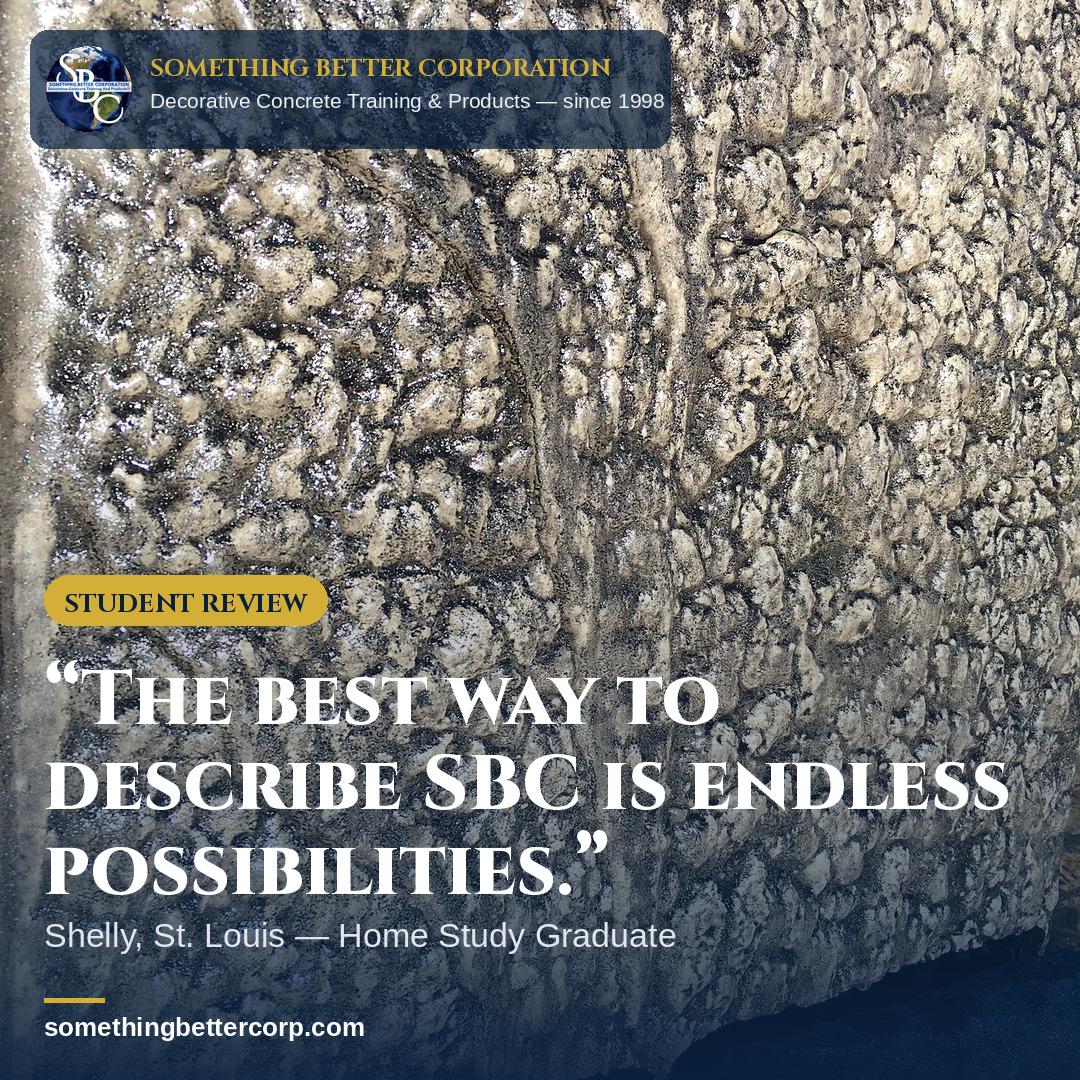
Stone stamps excel at focal points. A stamped accent wall or water feature draws the eye, and clients remember the investment. This perception gap is where your margin lives.
Best Concrete Stone Stamp Kit
The Best Concrete Stone Stamp Kit, 6 High-End Stone Texture Stamps In 1 Kit ($69.00) delivers six distinct stone patterns sized for vertical stamping and countertop edge work: 9x7", 8.5x6.5", 7x6.5", 8x5.5", 7.5x5.5", and 5x4.5", handling both large boulderscapes and detailed accents.

Mix patterns within a single project to create natural variation that mimics real stone formations, a technique taught in our hands-on training that produces authentic rather than repetitive results.
Concrete Masonry Form Stamp Set
For smaller projects and tighter budgets, the Concrete Masonry Form Stamp Set, 2 Stamps, 7.5"x5.5" & 6"x5" ($27.95) covers essentials: two stamps for vertical wall stamping, countertop overlays, and boulder texturing. Best for contractors managing 5-10 projects monthly or testing the market before scaling.
The lower price doesn't mean lower quality, both stamps are cast from the same durable material as premium kits. The tradeoff is pattern variety, not durability, making this kit a low-risk way to prove the business case.
Wood Texture Stamps for Realistic Detail
Wood patterns occupy a unique market position. Homeowners love the aesthetic of timber without the maintenance burden. Stamped concrete delivers that look at half the cost of real wood and lasts indefinitely. A 2026 decorative-concrete article from For Construction Pros, citing The Euclid Chemical Company noted that stamped concrete can deliver the look of timber with the durability of concrete.
Wood stamps create texture through grain detail and knot patterns. Realistic grain lines suggest growth rings, and knot stamps break up repetition.
Best Concrete Wood Stamp Kit
The Best Concrete Wood Stamp Kit, 9 Piece Wood Grain & Knots Stamp Kit ($65.95) includes nine specialized stamps: large, medium, and small grain stamps plus six unique knot designs. Sizes range from 3" to 7", covering everything from detailed accent work to large surface areas.

This kit shines on countertop edges and concrete furniture. Stamping the edges of laminated counters with a cement overlay creates faux wood trim that looks carved, a technique that commands premium pricing and differentiates your work.
Tree Stump Stamp Kit for Landscape Features
The Tree Stump Stamp Kit ($59.95) contains three unique tree stump end designs: Classy End (9" wide), Great Grandpa Rugged (9" wide), and Common End with termite holes (10.5" x 11"). Each stamp creates a genuine realistic tree stump design in concrete.

This kit opens a niche application: landscape features. Stamped tree stumps work as seating, planters, or focal points. Homeowners rarely see this, which means less competition and stronger perceived value, one tree stump feature can justify an entire project bid.
Texture Rollers: Covering Large Areas Efficiently
Texture rollers solve the speed problem. Stamps excel at detail and accents but slow down on large open areas; rollers cover square footage 10-15 times faster with consistent texture, no seams, no stop lines.
Rollers work best on fresh concrete or cement overlays at clay-like firmness (typically 10-15 minutes after placement, longer in cool weather). A release agent, odorless mineral spirits, never water, is essential; spray before every pass to prevent sticking and ensure detail transfer.
Pro Kit with Five Rollers and Four Stamps
The Concrete Texture Rollers Pro Kit, 5 Rollers and 4 Stamps ($159.00) bundles our most versatile patterns: Weathered Flagstone, Classy Granite, Narrow Italian Slate, Large Weathered Granite, and Large Weathered Slate. Each roller is approximately 8 inches long and 2.75 inches in diameter, designed to fit standard 9-inch roller frames. The kit includes four hand stamps for borders, steps, and touch-ups where rollers can't reach.
This kit covers residential and commercial projects, and the five patterns work together without obvious repetition. Every roller and stamp is cast in heavy-duty polyurethane in the USA.
Single Rollers for Specific Pattern Needs
Not every contractor needs five rollers. The Best Italian Slate Stamp Roller, Concrete Stamping Texture Roller ($49.95) delivers non-repetitive Italian slate textures at 9.125" x 2.75", perfect for contractors specializing in high-end patios and driveways.
The Best Coral Stone Stamp Roller, Concrete Stamping Texture Rollers by SBC ($67.95) creates stunning coral stone patterns ideal for resort and luxury residential work. The Concrete Texture Rollers-The "Original" Weathered Flagstone Texture Roller ($39.95) offers flagstone finishes.
For contractors managing specialized niches, single rollers make sense: you avoid unused inventory and focus capital on patterns that drive your projects.
Custom Concrete Stamps for Branded Projects
Custom logos and branded stamps unlock a different revenue stream. A developer stamping project names into entries, a resort adding logos to pool decks, a high-end home with the family crest in the driveway.
Custom stamps require original mold work. Work with manufacturers who cast from your design files or physical samples.
Best Concrete Wood Stamp Kit, 9 Piece Wood Grain & Knots Stamp Kit →
Concrete Stamp Maintenance and Care
Tool maintenance determines longevity, but most care advice online is written for occasional DIY users. Contractors need a repeatable end-of-pour routine that fits a jobsite schedule, because neglect kills even premium durable concrete stamps within months.
The end-of-pour cleaning window
Clean stamps immediately after use. Use a stiff wire brush and water while residue is workable. For stubborn buildup, soak about 30 minutes, then scrub with a brush soft enough not to gouge the pattern face. Avoid high-pressure washing directly on the detail face, which erodes fine texture over time.
Heavy-duty polyurethane stamps tolerate wire brushing and repeated soaking. If you run a mixed inventory, clean budget tools more gently and inspect them more often.
Storage that prevents warping and detail loss
Store stamps flat in a dry location. Stacking or hanging causes warping, and a warped stamp transfers a visible curve into the concrete. Extreme heat damages polyurethane, so never store near furnaces, in a hot trailer, or in direct sunlight. For crews moving between jobs, a flat storage rack or dedicated truck-box shelf protects the tool and keeps patterns organized by type.
Inspection before every pour
Inspect stamps before each project for cracks, tears, and detail loss. Small imperfections transfer to concrete and damage your reputation, and a cracked edge can leave a raised line across an entire slab. Replace worn stamps promptly, a new tool costs less than a callback or a dissatisfied client.
Care differences by material
Polyurethane stamps hold detail through hundreds of uses and flex slightly for cleaner release, rewarding consistent cleaning and flat storage.
A simple contractor care checklist
- Clean stamps before leaving the site, while residue is workable.
- Soak stubborn buildup, then scrub without gouging the pattern face.
- Store flat, dry, and away from heat and direct sun.
- Inspect every stamp before each pour and pull worn tools from rotation.
- Apply a light annual mineral-oil coat and wipe off excess.
- Track which patterns wear fastest so replacement buying is planned, not reactive.
Proper care extends tool life indefinitely and protects the consistency that keeps repeat clients coming back.
Durability Comparison: Materials and Performance
Not all durable concrete stamps are created equal. Material composition determines how long stamps survive jobsite abuse, but most online comparisons stop at a lifespan number. Contractors need the mechanisms: how each material behaves under repeated concrete contact, how it releases, how it handles temperature and mix variation, and what that means for crew size and project volume.
How the materials actually behave
Premium stamps are cast from heavy-duty polyurethane. This material resists cracking, maintains detail through hundreds of uses, and flexes slightly during application for cleaner release. Polyurethane stamps from Something Better Corporation are designed by master artisan Bryan Gauthier with 36+ years of experience, ensuring each pattern captures authentic stone and wood detail. The flexibility is the key mechanism: a slight flex helps the stamp lift cleanly from the concrete, which reduces tearing at pattern edges and preserves crisp lines over repeated pours.
Standard rubber stamps sit in the middle. Budget plastic stamps are the most rigid and least forgiving. Cheaper materials demand more careful handling and more frequent replacement, which changes the true cost of ownership.
Side-by-side comparison
| Material | Lifespan | Detail Retention | Flexibility and Release | Best For |
|---|---|---|---|---|
| Heavy-duty polyurethane | 500+ applications | Excellent through full life | Flexes slightly for cleaner release | Professional contractors, high-volume work |
| Standard rubber | 100-150 applications | Good for first 50, then degrades | Moderate; edge tearing possible | DIY, occasional projects |
| Plastic/budget | 30-50 applications | Fair initially, poor after 30 | Rigid; cracks from impact | One-time projects, testing |
These ranges reflect common jobsite experience rather than a controlled lab test.
Performance in different concrete and weather conditions
Tool performance is not only about the material; it is about how the material interacts with the concrete and the weather. The concrete must reach clay-like firmness before stamping: too wet and stamps sink without detail transfer; too hard and stamps will not imprint. This window is typically 10-15 minutes after placement, longer in cool weather.
Release agent is essential: odorless mineral spirits, never water, sprayed before every pass to prevent sticking and ensure detail transfer. In hot weather the window shortens and stamps can become tacky; in cool weather it lengthens and crews need patience rather than force. A stiff mix holds detail better, while a wet mix can slump and blur the impression. Flexible polyurethane handles these variations more gracefully than rigid plastic, which fights the surface instead of following it.
Contractor-focused buying criteria
Choose stamps based on how you actually work, not just on pattern photos. Consider:
- Crew size and project volume. A two-person crew doing a few projects a month can start with a focused kit; a larger crew running high volume needs tools rated for hundreds of uses and a planned replacement cycle.
- Pattern versatility. Kits that combine multiple patterns let you vary texture within a single project and cover more of the residential and commercial market without carrying unused inventory.
- Job conditions. Vertical work, countertop edges, and tight accents call for hand stamps, while large open areas favor rollers for speed and consistency.
- Return on investment. A tool that lasts 500 applications spreads its cost across far more projects than a budget alternative that fails after 40, even if the sticker price is higher.
- Support and training. Tools backed by hands-on training and phone support shorten the learning curve and protect the investment.
Total cost of ownership, not sticker price
The math is clear once you divide cost by uses. Over a career, investing in durable concrete stamps saves thousands while delivering superior results.
For contractors serious about building a decorative concrete business, the right comparison is not which tool is cheapest today but which tool still produces crisp, sellable impressions after hundreds of pours.
Total Cost of Ownership: Rental vs. Purchase
Many contractors consider renting stamps for occasional projects. For a single project, rental seems cheaper than purchasing. But the calculation changes with volume.
Purchase a $69 stone stamp kit. The purchase breaks even after just two projects.
For contractors doing more than 5 stamped concrete projects annually, purchasing is financially mandatory. You also control tool quality, storage, and maintenance.
Contractor Training and Support
Tools alone don't guarantee success. Timing, technique, and material preparation matter enormously: the concrete must reach clay-like firmness, too wet and stamps sink without detail transfer; too hard and stamps won't imprint. Miss the 10-15 minute window and you waste concrete and tool time. Securing forms and templates with precision requires the same level of mastery as stamping, making the proper selection of industrial fastening tools essential for maintaining structural integrity throughout the curing process.
Something Better Corporation has trained 5,376 students since 1998 through hands-on classes and online video training. Our founder Bryan Gauthier teaches directly, sharing three decades of mastery. Every kit purchase includes step-by-step video training and personal phone support. We also offer FREE Training For Qualified Customers for contractors committed to professional-grade work.
For contractors serious about building a decorative concrete business, we recommend our Decorative Concrete Training for Contractors & DIY courses. These hands-on seminars teach not just how to use stamps, but how to run a profitable operation: pricing, project management, material selection, and advanced techniques that separate amateurs from professionals.
Durable concrete stamps are the foundation of a scalable decorative concrete business. Investing in premium tools from Something Better Corporation, cast from real stone and wood by master artisan Bryan Gauthier, eliminates the false economy of budget alternatives. Our stamps maintain detail through hundreds of uses, deliver authentic textures that command premium pricing, and come with expert training and support. Shop Now & Save and transform ordinary concrete into extraordinary art that builds your reputation and your margins.
Frequently Asked Questions
What should contractors look for in durable concrete stamps?
Contractors should prioritize stamps cast from high-grade polyurethane that holds detail through years of use. Look for tools designed by experienced artisans (like SBC's founder Bryan Gauthier with 36+ years in decorative concrete), stamps that replicate natural stone and wood textures authentically, and products backed by training and support. Durability depends on material quality, proper release agents (mineral spirits, never water), and correct timing, stamping when concrete reaches clay-like firmness, usually 10-15 minutes after placement.
How do you clean and maintain concrete stamps?
Clean stamps immediately after use with a brush to prevent concrete from hardening on the surface. Store in a dry location. Before each use, spray the stamp with odorless mineral spirits as a release agent so the texture releases cleanly from the concrete. Never use water as a release agent. Inspect stamps regularly for cracks or worn detail, and replace worn covers to maintain pattern clarity. Proper storage and consistent cleaning extend the life of your tools significantly.
What is the difference between concrete stamps and texture mats?
Concrete stamps are hand-pressed tools (ranging 5x6 inches to 10x11 inches) that create individual impressions, ideal for borders, edges, countertop details, and touch-ups. Texture mats (or rollers) are larger covers that fit standard 9-inch roller frames, covering open fields quickly without seams or stop lines. Stamps offer precision and control for intricate work; rollers deliver speed and consistency for large areas. Most professional projects use both: rollers for expansive surfaces and stamps for finishing details.
Can concrete stamps be customized with a company logo?
Yes, custom concrete stamps can be designed with company logos or unique patterns. Something Better Corporation offers custom stamp design services where logos and branded patterns are cast into durable polyurethane tools. Custom stamps are ideal for contractors building a distinctive brand identity or for projects requiring permanent identification. Work with the manufacturer to discuss your design, size requirements, and production timeline to ensure your custom stamps meet your project specifications.
How do contractors choose a concrete stamp pattern for a project?
Start by understanding the project's aesthetic goals and the client's preferences. Stone patterns (slate, granite, ashlar) suit high-end patios and driveways; wood patterns work for countertops, feature walls, and landscape accents. Consider the concrete surface size: large open areas benefit from non-repetitive patterns like Italian slate or weathered flagstone to avoid visible seams. Test patterns on small samples first. SBC offers training classes where contractors learn pattern selection and application techniques, ensuring professional results that match client expectations.
